
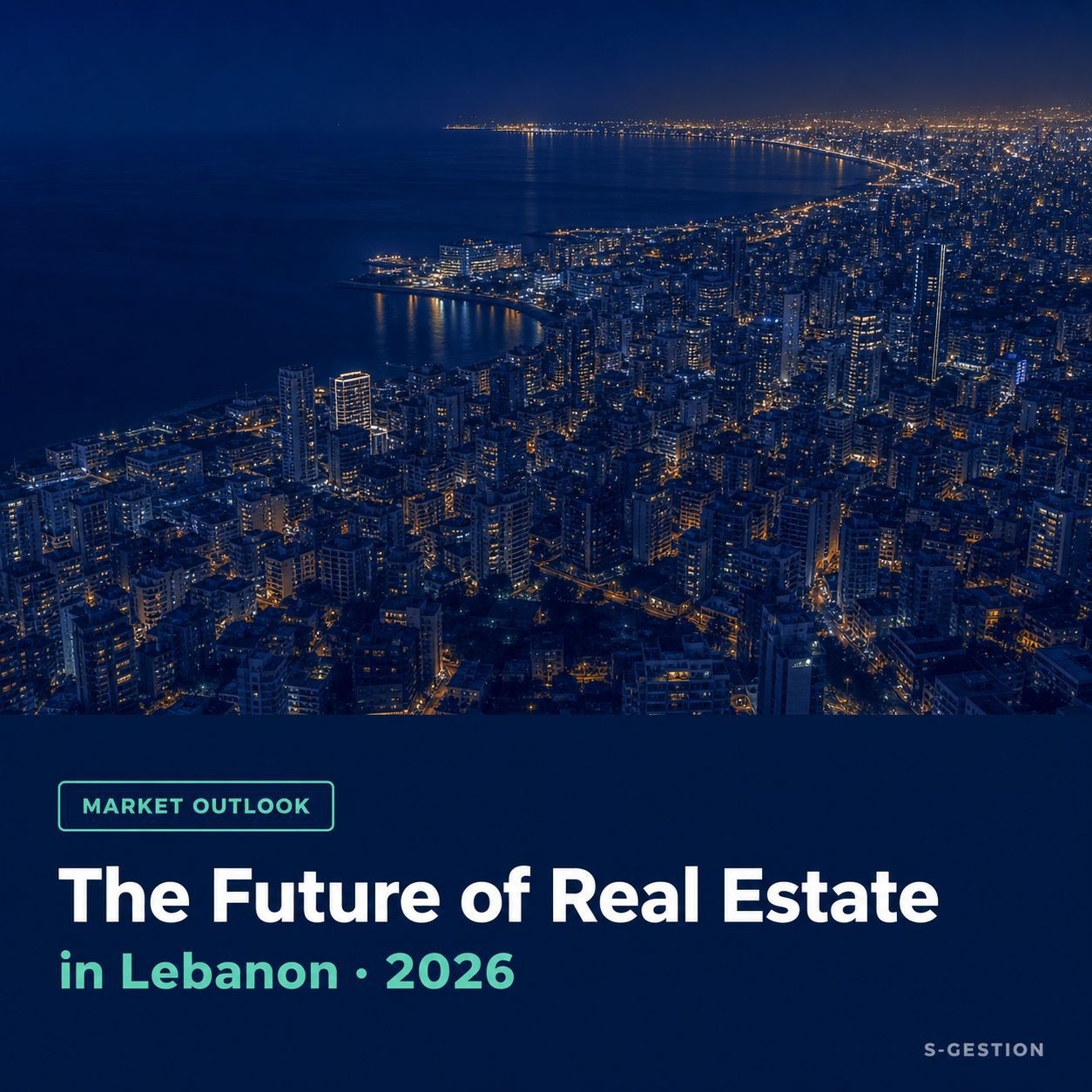
The Future of Real Estate in Lebanon: Trends Shaping 2026 and Beyond
The Lebanon real estate market is entering a new phase in 2026. After years of economic uncertainty, recent data and market activity suggest that the sector is not only stabilizing — but also showing signs of growth and transformation. For investors, developers, and homebuyers, understanding these emerging trends is key to making smart decisions in the evolving Beirut real estate market.
So, what does the future of real estate in Lebanon look like?
1. A Market in Recovery — and Growth
One of the clearest indicators of momentum is the surge in activity across the Lebanese property market. In 2025 alone, real estate transactions increased, signalling renewed investor confidence and market demand.
At the same time, property prices in Beirut have begun to stabilize after years of correction, with gradual appreciation expected in high-demand areas moving into 2026.
This combination of rising transactions and stabilizing prices is often seen as a strong foundation for long-term market growth.
2. Shift Toward Smaller, Smarter Developments
One major trend shaping the future of real estate in Beirut is a shift in what buyers actually want. Instead of large luxury apartments, demand is increasingly focused on:
- Smaller, more affordable units: max 120sqm with an average budget of 400,000$
- Functional layouts with modern design
- Energy-efficient and cost-effective homes
Due to rising construction costs and economic constraints, developers are adapting by building smarter, more efficient properties that align with current buyer needs.
This trend is expected to dominate the Lebanon property market over the next few years.
3. Real Estate as a “Safe Haven” Investment
In Lebanon, real estate has always been more than just a place to live — it’s a financial strategy. In 2026, this remains true more than ever.
With ongoing currency fluctuations and banking limitations, many investors see buying property in Lebanon as a way to:
- Protect wealth in tangible assets
- Store value in USD-based transactions
- Secure long-term financial stability
Experts continue to describe real estate as one of the most reliable safe haven investments in Lebanon today.
4. Rising Demand from Expats and International Buyers
Another key driver of growth in the Beirut real estate market is demand from:
- Lebanese expatriates
- Regional investors
- Lebanese professionals with stable incomes—doctors, entrepreneurs, executives, and business owners—are today the true drivers of the real estate market. Unlike speculative investors, these buyers are using their surplus savings to secure tangible, long-term assets.
Many expats are investing in apartments for sale in Beirut either as a second home or a long-term investment. This inflow of fresh USD into the market plays a major role in sustaining property demand and supporting price stability.
5. Urban Hotspots and Emerging Areas
While traditional areas like Achrafieh, Hamra, and Verdun remain strong, the future of Lebanese real estate investment is also expanding into:
- Coastal regions, like batroun
- Suburban developments around Beirut, like the metn area
- Emerging residential zones offering better value like Nahr in Achrafieh and some areas in Gemmayze pasteur
Experts predict that high-demand urban areas and coastal cities will continue to see gradual price appreciation in the coming years.
Final Outlook: A Market Full of Opportunity
The future of real estate in Lebanon is not without challenges — but it is clearly evolving. With increasing transaction volumes, stabilizing prices, and shifting buyer preferences, 2026 is shaping up to be a year of strategic growth and opportunity.
For investors and buyers, the key lies in understanding these trends:
- Focus on high-demand locations
- Prioritize functional and modern properties
- Take advantage of current market conditions
As the Beirut real estate market continues to adapt, those who act early and strategically may benefit the most from Lebanon’s next real estate cycle.